Delegating Without Losing Control in Higher Ed
The Operational Black Box: why managing and supervising aren't the same, and how traceability replaces anxiety with real institutional trust.

Key Takeaways
- Operational Black Box: why traditional CMS platforms leave rectors and directors without visibility into what happens in their digital ecosystem.
- Managing vs. supervising: the distinction that lets you delegate to hundreds of distributed editors without giving up strategic control.
- Traceability as the foundation of trust: how an Activity Log and alerts on critical changes turn delegation into an informed decision.
Delegating digital communication to hundreds of editors spread across faculties, schools, and departments is unavoidable in a modern university. It’s also, without the right mechanisms, a constant source of anxiety for senior leadership.
Not out of distrust in the teams. But out of lack of visibility.
When you can’t see what’s happening in your digital ecosystem, you can’t govern it. And what can’t be governed eventually fails at the most inconvenient moment.
The operational black box problem
Most content management systems are designed for editors, not for executives. They’re production tools: they let you create, modify, and publish. But they offer very little strategic oversight for anyone who isn’t in the operational detail day to day.
Let’s call this the Operational Black Box: the rector, the Marketing director, or the CIO knows content is being published constantly, but they don’t have a consolidated view of what’s changing, who’s changing it, and whether those changes respect institutional policies.
Managing isn’t supervising: the distinction that changes everything
Senior leadership doesn’t need to manage every piece of content. It needs to supervise the system that produces it.
Managing means being in the editorial flow: reviewing every change before it goes out. That doesn’t scale.
Supervising means having visibility over the outcome, with the ability to react when something deviates. That does scale. The operational principle is as old as it is effective: “Trust, but verify.”
The platform that supports this distinction can’t be a conventional CMS. It has to be something designed from the ground up for decision-makers, not for executors: a supervision layer that sits on top of the editorial flow without interfering with it. At Griddo we’ve been building exactly that — and we present it in the next article.
The three capabilities of digital accountability
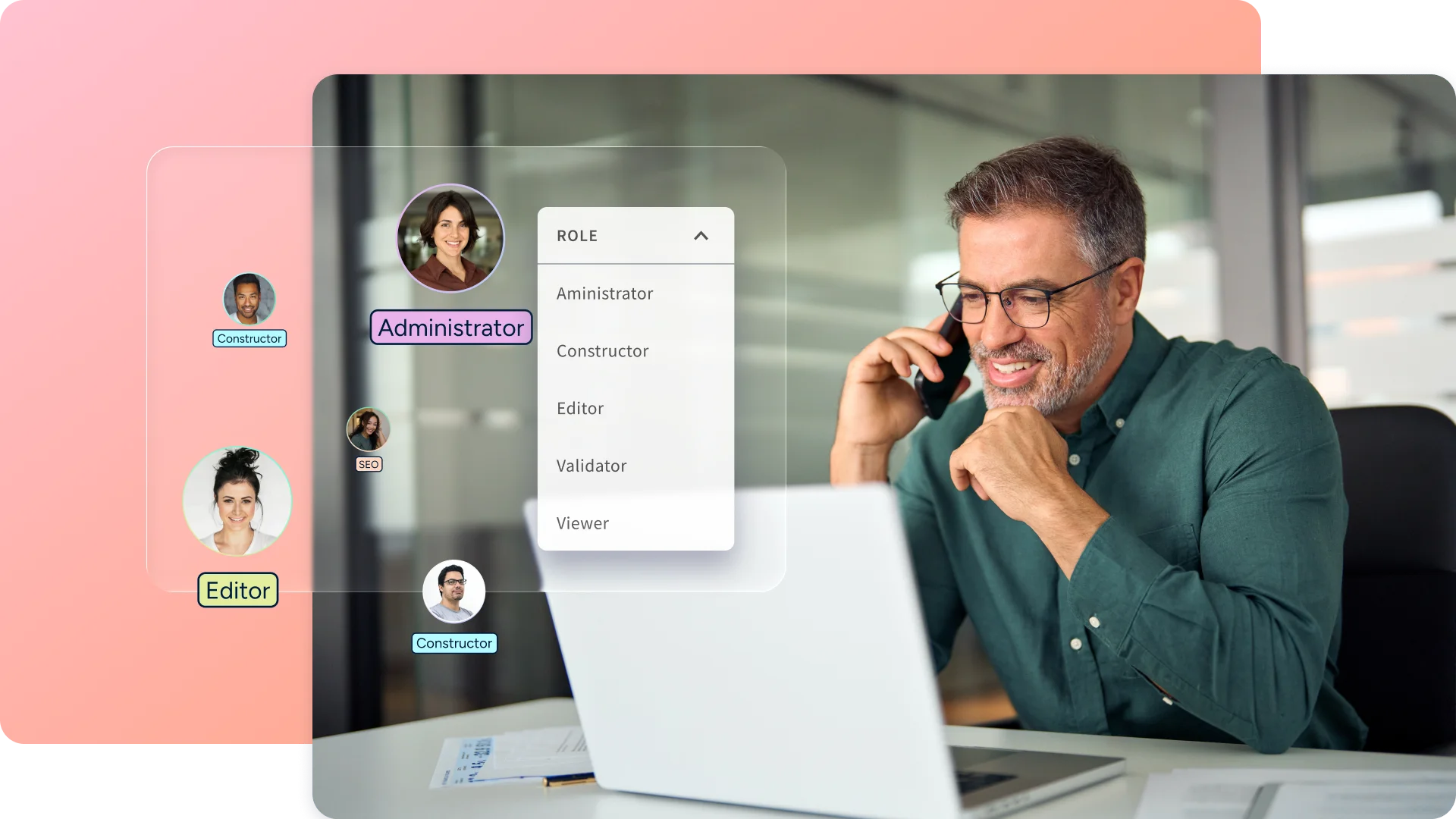
Delegating with confidence in a university environment means the people responsible for each action must be identifiable and decisions must be traceable.
Without these capabilities, operational delegation becomes a bet, not an informed decision. This is one of the arguments university CIOs use to justify the investment in governance platforms: the return isn’t only in publishing speed, but in the reduction of institutional risk.
The scale of that risk is not trivial from the outside either: McKinsey points out that universities face simultaneous challenges in enrollment, value perception, and digital transformation, which raises the cost of any visible operational failure.
Why traceability is the foundation of institutional trust
When a distributed editor knows their actions are recorded in an auditable log, they act with more care. Not out of fear, but because the system creates an implicit standard of responsibility. It’s the same logic that makes secure architectures in university environments more robust than those that depend on policies and processes alone.
When a leader can review critical changes from their phone at any time, they can delegate with real confidence instead of latent anxiety. This is Executive Peace of Mind: not the illusion of control, but real control through visibility.
This piece closes the third pillar of our series on university digital governance, after the autonomy paradox and digital fragmentation and content as an asset and semantic governance.
Next week we close the cycle with the fourth pillar: digital sovereignty and the resilient university in the face of technological change. And we introduce what we’ve built to answer everything we’ve raised in this series in Beyond content management: Griddo App.